Tommy Reilly International Club (TRIC), 1967-71

Return to the main Tommy Reilly Retrospective page

Cheng Jang Ming wrote: Not many people know much about TRIC these days. I don’t remember the first time I came across TRIC, but it definitely didn’t strike a chord with me at the time.

Recently after hearing some of Roger’s old BBC radio recordings about TRIC, I became fascinated by it. I asked some questions and things became clearer.

It was not only a club for Tommy Reilly to give lessons to his pupils, but it was also a place for trying out new harmonica compositions and a meeting centre for musicians and composers.

Hammonds Wood, the home of Tommy and his wife Ena, was the venue for TRIC. At that time, many people considered Hammonds Wood the Mecca for harmonica players. People from Britain and overseas went there to learn from Tommy. I started digging into the history of TRIC with immeasurable help from David Reilly, Sigmund Groven, Uwe Warschkow, Frank Semus, Carol Bloxsome (Carol Axford) and Roger Trobridge. Here is what I learned.

The Early Days

Tommy was born in Canada in 1919. He moved to England in 1935 when his father, Captain James Reilly, became Musical Director of the newly formed Hohner National Song Band League. Tommy turned professional at the age of 16 but he was interned by the Germans at the start of WW2 when he was studying violin in Leipzig. He worked hard on his harmonica technique during his time in the camps using the knowledge he had gained from his studies on violin. This led to him being recognised as the acknowledged master of the chromatic harmonica.

When he was released at the end of the war, in 1945, he restarted his musical career as a speciality act in a variety show called Twinkle where he met Ena who was the Principle Girl in the show. They married and had a son David.

Tommy Reilly travelled in many countries, giving concerts with some of the world’s foremost orchestras. As the years went by, the idea with an international club grew, because of his concern for quality of tuition available for harmonica players.

He met many harmonicas players when he was on tour but he found they were not reaching the standards of performance that they ought to have done. They liked the instrument and they wanted to learn to play it properly. Unfortunately there was no where that they could get together and study the chromatic harmonica as a legitimate instrument. Everybody seemed to be doing things in their own way. Tommy thought someone had to set a certain standard and say, “Do it this way!”

The Creation of TRIC

In the end, it was Ena who started TRIC! Many of Tommy’s fans wrote to him and it was Ena who would answer them. There were too many letters and if she couldn’t answer some of the technical questions, she would get the answer from Tommy whenever he was free. It was taking a lot of her time, so around 1965 she thought of the idea of forming a club so that players could come to Tommy for lessons, and also meet one another to exchange ideas, whether they were amateurs or professionals.

TRIC began to take shape at the Reilly’s house in Sunbury on Thames, London, around 1964-6, but as it began to grow they decided to look for something that could accommodate more people. They looked at many houses over the next eighteen months, before finding Hammonds Wood.

Hammonds Wood was a very large house with 14 bedrooms, built in 1905, on 11 acres of land on the outskirts of the small rural village of Frensham, near Farnham, in Surrey.

Hammonds Wood

The land included a long drive, stables, a paddock, lawns and wooded areas, which fell away to the banks of the River Wey.

It cost 10/6 (55p in today’s money) to join TRIC, which provided all sorts of general information services for the harmonica world. Members could come to Hammonds Wood and meet other players from all over the world, both amateur and professional. Most important of all, they could have lessons with Tommy.

Tommy enjoyed his time with the pupils who came, but he did not take complete beginners. He was not sure that he would be any good at teaching. It wasn’t until he started teaching and had to answer questions from his pupils that he really began to understand what he was doing. He was just playing in a natural way. Teaching other players made him analyse what he was doing so that he could tell them how to do it. Here is an application form for TRIC when it was active between 1967-71.


TOMMY REILLY INTERNATIONAL CLUB (T.R.I.C.)

The Tommy Reilly International Club is an organisation for the advancement and fuller enjoyment of the harmonica in all spheres of music.

Under the leadership of world-famous
harmonica player and teacher Tommy Reilly, the club has been formed for the benefit of harmonica players everywhere.

This includes professional and amateur players as well as nonplayers.

The club will assist in the formation of local branches where members may meet for their mutual enjoyment and encouragement.

In addition, through the club’s international organisation, members can exchange news and ideas with other enthusiasts thousands of miles away in other countries.

The aims of the Tommy Reilly International Club are

  1. To make expert harmonica tuition available for the beginner and advanced student.
  2. To sponsor local and national harmonica festivals and concerts.
  3. To provide a link between harmonica enthusiast all over the world.
    I enclose 10/6. Please enrol me as a member of the Tommy Reilly International Club.
    Name …………… (Block Capitals Please)

The Activities at TRIC.

A family magazine introduced by Ken Sykora and including: Tommy Reilly’s International
Anne Catchpole visits Hammonds Wood where Tommy Reilly has established a centre for harmonica players deep in the Surrey countryside.

What follows is an edited transcription of the 15 min section in the program about TRIC. You can listen to the broadcast if you want at the end of this section.

With its many attractive bedrooms, and large gardens, Hammonds Wood could take up to 10 visitors. There was no fixed program or routine; the time was spent having lessons with Tommy, practicing, listening to records and tapes, making tapes, and chatting over endless cups of tea and coffee. Meals were taken at any time, and Ena did all the cooking.

Ena said, “When they came here, I looked after them. Generally if they had any problems, they would tell me. Of course, they were in our home which meant I had to look after them. Some time ago Ho Chong Wing came here from Singapore. I wrote to him to ask about the food he could eat. We introduced him to many English dishes like pancakes, and he took the recipe back for his wife to make them for him when he returned to Singapore. It’s quite fun really. It’s like one big happy family, we all help each other!”

The people who helped Tommy and Ena to run TRIC were their son David, Tommy’s personal manager, Sigmund Groven, and occasionally, James Moody. TRIC had members from many different countries, some of them would come to Hammonds Wood for tuition more or less regularly.

A very active member at TRIC was Brian Chaplin, the All-Britain Champion in 1967. He had been playing the harmonica since he was 13. As there was no way then to get proper tuition for the harmonica, he had enlisted the help of a saxophone player and organist, Les Bloxsome, whose daughter Carol, accompanied him on the piano – she is now better known as Carol Axford.

Brian said, “Carol’s father helped me quite a bit, as did Carol, who played the piano. We worked very hard but we hardly made any progress until we were able to come to Hammonds Wood. Since we’ve been here, it’s been absolutely fantastic! I’m an engineer and I find it very difficult to turn off after a hard day’s work, talking only engineering. Hammonds Wood really does set the right environment and gets you tuned in to the music.”

Carol decided to play the harmonica herself, and two years later she became the British amateur champion. She was also an active member of TRIC. She said “I usually came and practiced for three days. I would have one lesson with Tommy because that was enough to keep me going for another month”.

Brian said, “I’m slightly different from Carol. I usually I booked two lessons, one per day. I locked myself away in a little room and beat my brains out trying to put into effect what Tommy has taught me. From a lesson lasting one hour, it seemed that I needed hundreds of hours of practice to attain the standards Tommy set! Then I would have another lesson to consolidate what he had taught me already and what I had been practicing since the last lesson.”

Brian commented, “Carol has been able to learn the right way to play the harmonica right from the start, unlike myself, who had picked up bits and pieces here and there. I had learned some bad habits as well as some of the right things. One of the difficulties I had in the first year in TRIC was, in fact, undoing all those wrong things that I have taught myself.

As Carol recalls, “A typical day might start with Tommy having to clean out the Aga stove, that was his job in the kitchen. He used to leave his silver harmonica on the side and wasn’t worried that I would have a go at playing his super instrument while he was working! Tommy only taught one to one and quite often the hour long lesson he gave me would last 2 hours. We didn’t use any piano accompaniment, simply because there was no piano in the large room where the lessons were carried out. There was no timetable at all.”

Carol added, “I have many happy memories of my time at TRIC. The the surroundings of the lovely house and grounds gave such an ideal setting for people to come from everywhere for tuition. Tommy was a very relaxed person and his lessons were very interesting and he demanded high standards. I remember spending at least 20 minutes trying to get 4 consecutive notes to sound as he thought they should, and he was always right, a superb musician, perfectionist, and virtuoso.

Brian said, “I have often wondered what sets certain musicians in a class of their own, even though their contemporaries may, professionally, be very competent indeed. Well, Tommy touched on this, and was at great pains to demonstrate the finer points of techniques which are required.”


Here is a recording of the
Home in the Afternoon‘ broadcast


The active members of TRIC were: Carol Bloxsome (UK), Graham Butcher (UK), Bryan Mapperley (UK), John Ferguson (Ireland), Dimas Barrantes (Costa Rica), Ho Chong Wing (Singapore), Joe Sakimoto (Japan), Ho Kit Fun (Hong Kong), Doris Ehmann (Germany), Brigitte Burgbacher (Germany), Helmut Herold (Germany), Ernst Hotan (Switzerland), Heiner Schwenkglenks (Germany), Peter Jansen (Netherlands, father of Rob Jansen from Fata Morgana), Tariq Hameed (a Pakistani player living in London at that time), Frank Semus (UK), Johnny Stafford (UK), Wally Chapman (UK). There were also many professional musicians who were members, including Richard Hayman (US), Jerry Murad (US) and several others.

Members of TRIC premiered new works for harmonica ensemble by James Moody who conducted and played piano, at the Accordion and Harmonica Day in Leicester in 1970.

The players were: Tommy Reilly, James Hughes, Sigmund Groven, Brian Chaplin, Carol Bloxsome, Graham Butcher, and Bryan Mapperley.

The Film Recording of TRIC from 1970

During the summer of 1970, Norwegian TV (NRK) came to Hammonds Wood with a film team to record a special programme about Tommy’s teaching activities in TRIC. The resulting film can be seen on the NRK website. It has a Norwegian soundtrack and no credits.

Here is a new version (2025) of the NRK film in English created by Roger Trobridge with help from Sigmund Groven, who edited the original film in 1970.

The musicians seen in the film are Tommy Reilly, James Moody, David Reilly, Sigmund Groven, Doris Ehmann, Brigitte Burgbacher, Helmut Herold, Jimmy Hughes, Brian Chaplin, Bryan Mapperley, Graham Butcher and Carol Bloxsome (Axford).

The End of TRIC

Ultimately, TRIC came to an end in 1971. It involved a lot of hard work both for Ena and Tommy, and they had no financial sponsors. The fee they charged the members was obviously a highly subsidized rate, because what was paid for a week at Hammonds Wood couldn’t even cover the cost of food.

It was also difficult to combine TRIC activities with Tommy’s extensive touring schedules and other professional commitments. In 1971, Tommy was 52, and he was at his peak simultaneously in techniques (which goes downhill as one ages), musicianship (which matures as one ages) and fame. He also needed to make more income for his family. It was a clear choice that he took on more performances.

The entire TRIC project was never conceived as a business. Besides the low fees he charged for the pupils, Tommy was very kind to them, so kind that he sometimes gave money back to the students who were (or appeared) broke, to let them buy a pair of much needed shoes.

Tommy was treating TRIC more as a gathering place for meeting like-minded friends (both old and new), having a cup of tea, eating good food, making great laughs, and giving some lessons. James Moody was also able to try out new compositions for solo and group harmonicas. Technically the best player in the world was asking only a few pounds for his secrets. So it was only natural that TRIC would wind down in just a few years.

However, Tommy didn’t stop taking in students even after he closed down TRIC. He continued to take in a few selected students in between his performance engagements, especially during the summers. He also gave workshops during harmonica festivals and this had benefited a great many players. So his playing style and methods still live on in many of his pupils.


Tommy did not teach beginners but he produced a harmonica course with James Moody, (Book and 2LPs or tape cassettes), that would get the player up to the required standard. This course was published by Messrs. Hohner Ltd. London in 1967.

A digital version of the Course was reissued by Barbara Tate Douglas Tate’s widow) in 2006 and it was re-released in 2021 as The Tommy Reilly Harmonica Course by Norsk Musikforlag – Musikkforlagene – NM Notebutikken – as a book with 2 CDs.

Tommy also wrote a book “Studies for Chromatic Harmonica” to help harmonica players with medium to advanced music to advance their playing skills.


I really envy those who were fortunate to be TRIC members. It was a truly great milestone in the harmonica history! ” Cheng Jang Ming

The source of the cartoon is unknown – Please contact me know if you know the cartoonist.

Return to the main Tommy Reilly Retrospective page

Larry Adler harmonica videos 1972 and 2000

Here are some videos I have restored or edited showing Larry Adler at the peak of his ability in 1971 and also from his final year in 2000/2001.

1971 – “Playing the Thing

In 1971 Chris Morphet created his harmonica film “Playing the Thing” and this included visiting Larry Adler at his flat in Brighton (UK) where he was interviewed and recorded playing several pieces of music. Some of the footage was included in “Playing the Thing” but most of it was lost on the editing floor. I recovered most of the out-takes and reconstructed the original full interview and performances. Here are the resulting videos. The quality is not perfect as some of the 16 mm film was damaged or missing and was from different sources.

Interview  https://vimeo.com/987579664

Malaguena – https://vimeo.com/987579584

Gavotte – https://vimeo.com/987579649

Smoke gets in your eyes – https://vimeo.com/987579604

Genevieve – https://vimeo.com/987579631

The full story of my continuing reconstruction of “Playing the Thing” with the interviews with Larry Adler, Sonny Terry, Cham’ber Huang, James Cotton, Bill Dicey, Andy Paskas, The Herold Trio, Hohner ….. can be found on the Playing the Thing” website.

The website also has a video of the original film, “Playing the Thing“, which was released in 1972.

2000-2001 – Larry Adler’s final years

Here are some other videos from Larry’s last year before his death in 2001.

One is from his appearance at the Millennium Festival in Bournemouth (UK) in 2000 organised by John Walton and the IHO.

The others are from his last days when he secretly left his hospital bed to play in the Albert Hall, and the tribute concert held a few months after his death.

You can watch these on my blog page – The final years of Larry Adler (1914-2001)

Nick Reynolds, The Alabama 3 via The Sopranos to The Simpsons

I love to hear the harmonica adding some atmosphere to a film or TV show. Unfortunately the musician who plays the music is rarely credited.

The Alabama 3

I was watching an episode of a series on Channel 5 (British TV) called Finders Keepers and there in the background was that harmonica sound. I checked the website and wrote to the producer and he told me the music was by the Alabama 3, a group from Brixton, in London. Feeling pleased with myself, I watched the program again and saw that their name was on the opening credits…

I visited the Alabama 3 website and found out more about their harmonica player, Nick Reynolds.

Nick Reynolds

Nick was born in London in 1962 and his first band was in the Royal Navy in1979. In 1983, whilst serving in Navy Intelligence in Whitehall, he played with the reformed 60’s group The Pretty Things until 1985 when he went to Australia. On his return to London in 1989 he played in a series of groups – Les Grandes Branleurs, Backstreet Band, the Brit-pop band Octopus, and the experimental electro jazz band Blowpipe before becoming part of the Alabama 3 in 2001. There are more than 3 members and they don’t come from Alabama.

Woke up this morning

Alabama 3 were a new band to me and we don’t have any TV subscription channels. This may explain why when I started looking at their recordings I was unaware of the world wide fame they had achieved when their recording of Woke up this morning was used for the opening credits of The Sopranos. The bluesy rap song with influences from Howlin’ Wolf, Mississippi Fred McDowell and Muddy Waters.

From The Sopranos to The Simpsons

I went off in search of news of The Sopranos and found some great videos and parodies of the opening credits to the TV show.

The Sopranos opening credits
The Simpsons Parody

Alabama 3 in concert

Here are two performances of Woke up this morning by Alabama 3. The first one live in concert and a second small group acoustic one with more of Nick on harmonica.

Woke up this morning – Belladrum 2023
Work up this morning – Cigar Box Sessions 2015

More on Nick Reynolds, harmonica player, writer, sculptor, artist, composer and producer here.

Midnight Cowboy – Toots Thielemans or Tommy Reilly – solved!

The theme from Midnight Cowboy is one of the best known pieces of music played on harmonica.

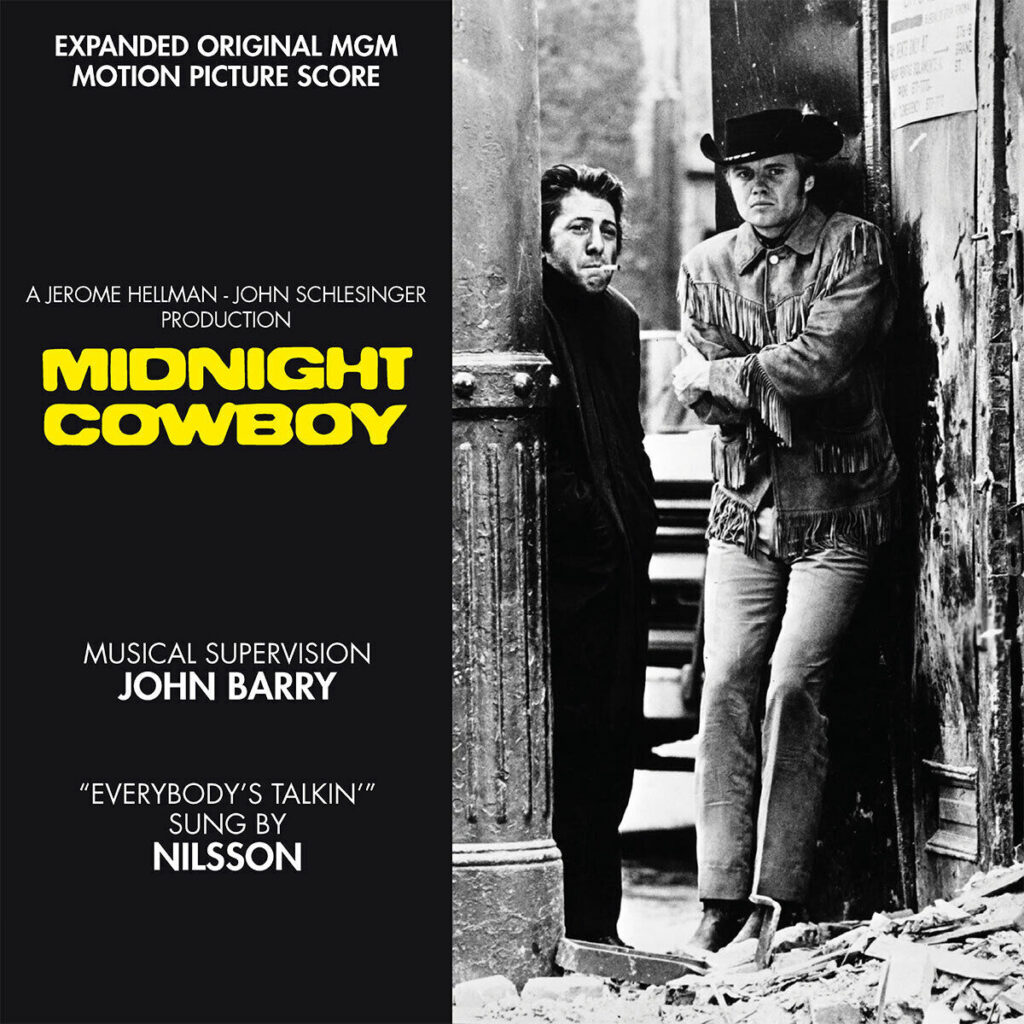
This is the version from the Soundtrack Album of John Barry’s music for the Jerome Hellman – John Schlesinger film Midnight Cowboy.

Everyone knows who played it, don’t they…
It was Toots, wasn’t it???

I stumbled over this question when someone told me it wasn’t Toots Thielemans, it was the British harmonica soloist, Tommy Reilly. It turned out to be more complicated than this.

The making of Midnight Cowboy

John Schlesinger began filming Midnight Cowboy in Florida, Texas and New York in 1968 and during 6 months of post production he realised that he needs some contemporary music for the film. John Barry had written music for Bond films and had also been involved with the UK popular music scene in the 60s as the leader of the John Barry Seven, and an arranger for pop singers, so he was asked to supervise the music for the film.

Some of the music had already been chosen, like Fred Neil’s Everybody’s Talkin‘, sung by Harry Nillson, but more, dramatic music was needed – something which was to become as famous as Everybody’s Talkin‘. A lonely harmonica tune that almost anyone could play.

The recording of the harmonica soundtrack with Toots Thielemans

John Barry said, “I wrote the harmonica theme, in which the counter melody is more important than the melody, giving a general repetitive feeling like going nowhere, to reflect the underbelly of New York. For the actual melody, I wanted something very unsophisticated, that any guy sitting outside a gas station in Texas could play. “

“We kept the instrumentation very simple, 12 string guitars, a rhythm section and the harmonica, so that the theme of Midnight Cowboy in the score would fit in with the musical language of the Nillson song.”

Toots Thielemans was living near New York at that time and his chromatic harmonica brought great tenderness and longing to the theme. He also can be heard on some of the re-recorded Nielsen pieces in the earlier part of the film. All the harmonica heard during the film is played by Toots.

The recording of the Film Music Album with Tommy Reilly

The commercial release of music from the film Midnight Cowboy is a bit more complicated. Eight of the twelve tracks on the sound track LP, called the Original Motion Picture Score released by United Artists Records (Liberty 1A 054-90639), were from the New York film soundtrack recordings, but the other four tracks, including Midnight Cowboy and Joe Buck rides again, were recorded in London in June 1969. This time the harmonica on Midnight Cowboy and Joe Buck rides again was played by Tommy Reilly. Any other harmonica heard on this album is by Toots.

The release of the single versions of the Midnight Cowboy Theme

Following the release of the LP soundtrack album, Toots and John Barry released a 7″ single (45rpm) of Midnight Cowboy on Columbia and Tommy Reilly and The John Scott Orchestra released a 7″ single (45rpm) version on Polydor.

Toots Thielemans and John Barry
Tommy Reilly and John Scott

These recordings show that it was Tommy’s idea to bend the notes in the main theme. Tommy always thought that that Toots was perfect for the movie and did a fantastic job.

The double CD “Midnight Cowboy – Expanded Original MGM Motion Picture Score

Much of this information comes from the CD notes of the excellent and comprehensive double CD “Midnight Cowboy – Expanded Original MGM Motion Picture Score“. [Quartet Records – QR434, MGM Records – QR434, Universal – QR434].

CD1 has the original LP tracks and some bonus tracks, including alternate versions of Toots playing Midnight Cowboy. CD2 has the music from the original film score. The CD booklet does not say Joe Buck rides again was played by Tommy Reilly.

Background to the John Barry recordings in London

Tommy Reilly’s manager, Sigmund Groven, added more background to the reason for the London re-recording of Midnight Cowboy. “John Barry had worked with Tommy several times before, including on the 1966 Marlon Brando film “The Chase” (soundtrack on CD: Varese Sarabande VSD-5229), and he wanted to feature Tommy in the Midnight Cowboy score.

As it happened Tommy was unavailable; he was on tour in Australia at the time, so John Barry asked Toots to play in the film. However, when Tommy was home after his Australian tour, John Barry was very pleased to be able to use him on the London sessions for the album.”

There are some great videos of Tommy and Toots playing Midnight Cowboy.

Toots plays Midnight Cowboy at 90 years old
Tommy Reilly plays Midnight Cowboy on Dutch TV

Extra Information.

1 – There are two recordings of the theme from Midnight Cowboy recorded by Toots Thielemans and John Barry after the release of the film. The commercial 45rpm version (above) has a “fattened” harmonica sound (flanger?) and the alternative take, which is also on the double CD, sounds like a straight mono recording.

2 – Popular concerts of John Barry’s music (including Midnight Cowboy and Dancing with Wolves) provided regular work for harmonica players. In the UK this has included Jim Hughes and Harry Pitch when Tommy Morgan could not make it from California. Phil Hopkins was once summoned to John Barry’s house in London as there were problems with Tommy Morgan’s UK visa.

Phil auditioned successfully and returned home to practice hard for the concert at the Albert Hall. Just before the performance he got a message that the visa had arrived and Tommy would do the gig. Phil got a cancellation fee and acknowledged that the audience got a better deal hearing Tommy Morgan play the harmonica themes.

3 – Shortly after the London recordings for the Midnight Cowboy soundtrack album Tommy had a telephone call from Polydor Hamburg where he had already made two commercially very successful albums with Kai Warner: Melody Fair and Latin Harmonica. He flew over the next day. They played him a recording from a new film score and asked him if he could play the harmonica exactly the same as the uncredited player on the LP.

The first take was perfect. The producer said: “You are a genius”, and Tommy started to laugh. The producer said: “What are you laughing for?” and Tommy admitted: “That’s me playing on the original record!” The single (Polydor NH 59323), with John Scott as musical director, and with Tommy credited this time (!), climbed the charts in many countries. (Sigmund Groven)

4 – Despite the success of the two recordings by Toots Thielemans and Tommy Reilly, the version recorded by two pianists, Ferrante & Teicher, was nominated for the 1969 Grammy in the category Best Contemporary Instrumental Performance. I don’t think John Barry was very pleased either.

HarpTalk Tumblr Blog

I stepped down as editor of Harmonica World magazine after the August 2019 issue and I decided to do the simple blog I never seemed to have time to do before .

I used to use the blog to announce when the new magazine was being mailed out. Now I want to make it more of a diary where I can share bits of research or news.

Your can check it out here – https://harptalk.tumblr.com/